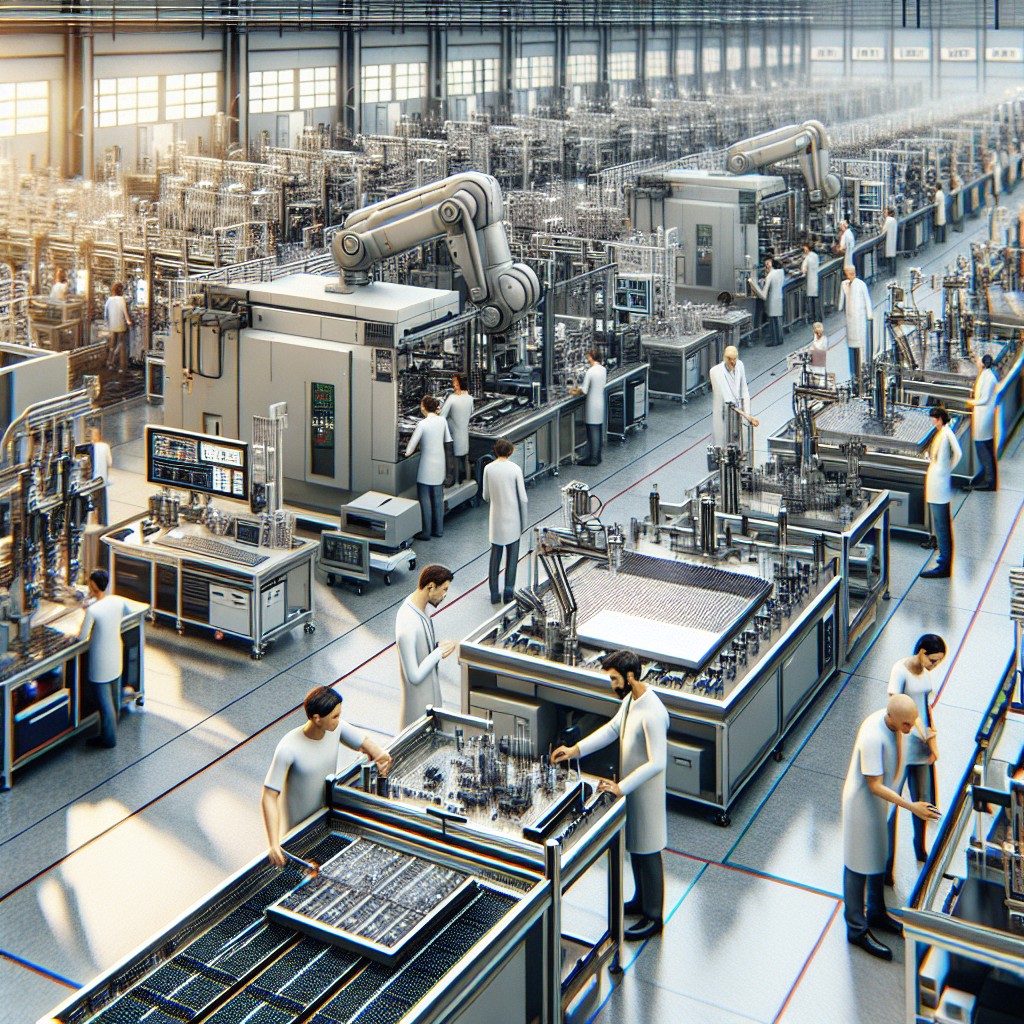
The global semiconductor industry has become a critical battleground for technological supremacy and economic security. As countries and corporations ramp up investments, the emphasis on slogans and political promises often overshadows a pivotal factor: actual semiconductor manufacturing capacity. Understanding why capacity holds greater significance than rhetoric is essential for assessing the future trajectory of this vital sector.
The strategic importance of semiconductor manufacturing capacity
Semiconductor manufacturing capacity refers to the actual ability of fabs (fabrication plants) to produce chips in large volumes, with consistency and quality. This capacity ensures supply chain stability for consumer electronics, automotive industries, telecommunications, and defense systems. While governments and companies frequently issue statements about self-reliance and technological leadership, it is the physical infrastructure and operational throughput that ultimately define influence in the semiconductor ecosystem.
Disparities between announcements and real output
Recently, several nations have launched grand initiatives aimed at boosting semiconductor production within their borders. However, many of these programs face lengthy timelines, complex construction phases, and technological challenges. The gap between public announcements and the actual ramp-up of manufacturing capacity can span years. Moreover, simply having factories does not guarantee immediate production of advanced chips, as expertise, equipment, and supply chain integration play significant roles.
The role of advanced technology nodes and capacity
In semiconductor manufacturing, the sophistication of technology nodes—measured in nanometers—coupled with manufacturing capacity determines a fab’s competitive standing. Capacity at older nodes may address demand for less complex chips, but global supply chain resilience increasingly depends on the ability to produce cutting-edge semiconductors at scale. Countries and firms capable of expanding capacity in the most advanced nodes gain a tangible advantage, beyond slogans.
Economic and geopolitical implications of capacity investments
Investment in semiconductor manufacturing capacity influences global trade patterns and geopolitical alignments. Regions with significant real chip production capacities attract further technological partnerships, research and development activities, and skilled workforce development. For instance, the Semiconductor Industry Association (SIA) highlights how capacity expansions in the U.S. and allied countries reinforce supply chain security. Mere political declarations without concurrent capacity growth may hinder these broader economic benefits.
Industry response and future outlook
Industry leaders emphasize the need for concrete capacity growth coupled with technological innovation. The IEEE, a global authority on technology standards, underscores the critical balance between building new fabs and enhancing manufacturing processes. In the coming years, real semiconductor manufacturing capacity will dictate which countries and companies emerge as leaders, rather than marketing narratives alone. The immediacy of chip supply concerns following recent shortages further stresses the urgency of this focus.
Frequently Asked Questions about semiconductor manufacturing
What defines semiconductor manufacturing capacity?
Semiconductor manufacturing capacity is the measurable ability of production facilities to fabricate chips in quantity, maintaining quality and technology standards.
Why is semiconductor manufacturing capacity more important than policy slogans?
Because actual chip production capabilities ensure supply chain reliability, whereas slogans do not guarantee tangible output or technological leadership.
How do advanced technology nodes relate to semiconductor manufacturing?
Advanced technology nodes indicate the capability to produce smaller, more efficient chips; capacity at these nodes reflects cutting-edge semiconductor manufacturing strength.
What challenges slow the expansion of semiconductor manufacturing capacity?
Building fabs involves high capital costs, complex supply chains, skilled labor needs, and lengthy development cycles, all impacting the speed of capacity growth.
How do semiconductor manufacturing capacity investments impact global economies?
Investments attract related industries, improve technological innovation, and strengthen supply chains, which are critical for maintaining economic competitiveness and security.